
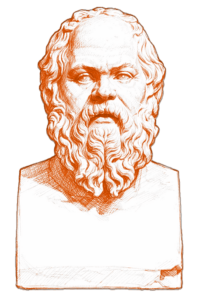
The history of Socratic studies starts with a problem, both historical and philosophical. Indeed, its trajectory reveals a persistent inquiry into what constitutes the historical figure of Socrates in the background of the many testimonies from different philosophers, what has become known as the “Socratic problem.” In antiquity, the foundational milestone for this literary and philosophical categorization occurs when Aristotle, in his Poetics (1447b), formally identifies the Σωκρατικοὶ λόγοι (Sokratikoi logoi), grouping them with the mimes of Sophron and Xenarchus as a specific genre of literature related to the imitation of human actions. The multiplicity of Socratic voices is also acknowledged by ancient doxographers who recognize the intellectual diaspora following the master’s death. Diogenes Laertius, in his Lives of Eminent Philosophers (II. 47), notes this heterogeneity: “τῶν δὲ διαδεξαμένων αὐτόν, τῶν κληθέντων Σωκρατικῶν, οἱ κορυφαιότατοι μὲν Πλάτων, Ξενοφῶν, Ἀντισθένης” (“Of those who followed Socrates, the so-called Socratics, the main ones are Plato, Xenophon and Antisthenes”). Furthermore, Augustine of Hippo, in De Civitate Dei (VIII. 3), marvels at how Socrates leaves behind a plethora of followers who, despite being disciples of a single master, establish widely divergent philosophical doctrines regarding the highest good.
The modern approach to the Socratic problem begins significantly in the early nineteenth century. A paramount milestone takes place with the intervention of Friedrich Schleiermacher in his 1815 essay “Ueber den Werth des Sokrates als Philosophen”. Schleiermacher distances Xenophon from the category of philosopher, establishing a paradigm that elevates Plato’s philosophical stature while marginalizing the broader group of Socratic thinkers. Following this, the late nineteenth and early twentieth centuries witness an institutionalization of Socratic studies characterized by holistic attempts to reconstruct the philosophical panorama of the Socratic schools. Prominent works of this era include Eduard Zeller’s Socrates and the Socratic schools (1876, 1877, 1881), Rudolf Hirzel’s Der Dialog. Ein literarhistorischer Versuch (1895), Theodor Gomperz’s treatises (1908), Heinrich Maier’s Sokrates. Sein Werk und seine geschichtliche Stellung (1913), and Wilhelm Schmid’s contributions (1915).
In the mid-twentieth century, the hermeneutical paradigm undergoes a radical transformation with the advent of the skeptical approach. Olof Gigon publishes Sokrates. Sein Bild in Dichtung und Geschichte (1947), in which he argues that every surviving testimony regarding Socrates must be considered pure literary fiction, rendering the historical Socrates inaccessible. This skeptical radicalization influences continental scholarship, steering researchers away from the historical figure toward philological and literary analyses of the surviving fragments, an approach furthered by scholars such as V. de Magalhães-Vilhena with Le problème de Socrate. Le Socrate historique et le Socrate de Platon and Socrate et la légende Platonicienne (1952). Consequently, established hermeneutical models, such as Gregory Vlastos’s subsequent account of the “two Socrateses,” have been dominant especially in the English-speaking academy, while the so-called “minor Socratics” remain largely obscured.
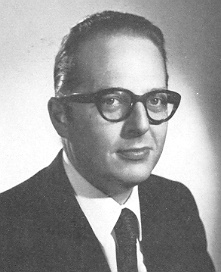
Giannantoni’s four-volume compilation dismantles long-standing prejudices regarding the “minor Socratics” and reveals a vast, intricate theoretical network that remains hidden throughout much of the twentieth century. This colossal editorial achievement dynamizes the field, prompting an upsurge of rigorous work that examines the philosophies of the broader group of Socratics.
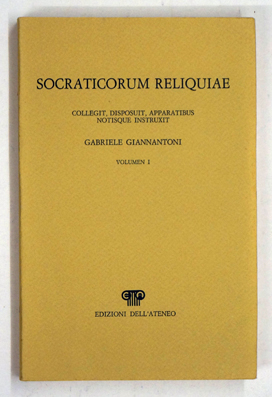
A monumental turning point in Socratic studies, which completely reshapes the modern academic landscape, occurs with the publication of Gabriele Giannantoni’s magnum opus, Socratis et Socraticorum Reliquiae (Napoli, Bibliopolis, 1990). Giannantoni compiles, for the first time, a comprehensive and philologically reliable collection of the fragments and testimonies of the entire Socratic circle, including the Megarians, Cyrenaics, Cynics, and Elians and Eretrians.
Following Giannantoni’s contribution, the last three decades experience a renaissance in the multifaceted approach to the Socratic movement. Landmark studies such as Aldo Brancacci’s Oikeios logos: La filosofia del linguaggio di Antistene (1990) and the essay collection The Socratic Movement (1994), edited by Paul A. Vander Waerdt, along with multiple publications from Livio Rossetti, pioneer this new wave of Socratic scholarship. To overcome the barrier that Giannantoni’s untranslated Greek and Latin collection poses for non-classicists, recent decades see the production of modern translations and editions. Significant achievements include Claudia Mársico’s comprehensive Spanish translations, Filósofos socráticos. Testimonios y fragmentos. Vol. 1, Megáricos y Cirenaicos (Buenos Aires, Losada, 2013) and Filósofos socráticos. Testimonios y fragmentos. Vol. 2, Antístenes, Fedón, Esquines y Simón (Buenos Aires, Losada, 2014), as well as the English anthology The Circle of Socrates. Readings in the First-Generation Socratics (Indianapolis, 2013) by George Boys-Stones and Christopher Rowe.